Play With Your Heart
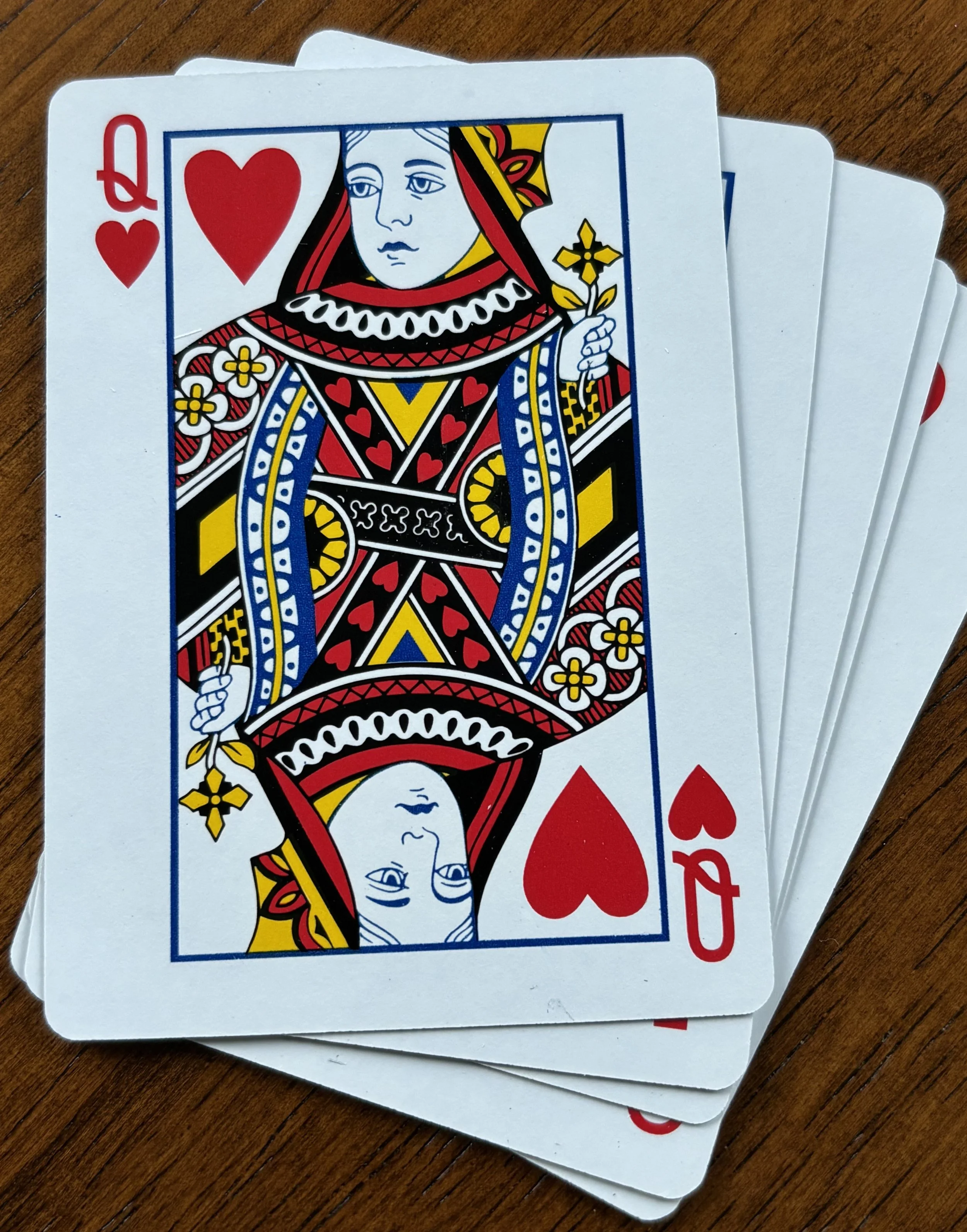
People often say the key to success is “knowing how to play the game,” an implication that life has a set of rules and will follow a particular order if you only use the correct strategy. But there are games of luck, games of wit, games of strength, and games of logic. Life often feels frustrating because it’s a complicated confluence of all of the above, and the stated rules are different for each player. When we come into the world, we are born into a set of games. We have to decide which games are worth our time and what strategies to use. I have always been suspicious of the games life asks me to play. I question how success is defined by the person explaining the game. I look at the people “winning” right now and I can say, without hesitation, I want no part in the game they’re playing.
But there is one game no one can avoid. It is the game of the heart. The balancing act of emotions. On one end of the spectrum is a cold numbness in which you can march through life feeling nothing, barely noticing its passing. On the other, a tsunami of despair that buries you under its weight and makes you question whether or not the game is worth your effort. The sweet spot is in the middle; a narrow section where you can open your heart to the world and, if you’re brave enough, even feel hope. There are times in life when this middle section seems to be a large, solid platform – easy to find your footing. And then there are times like we are in now, where staying open and loving is like balancing on a knife’s edge.
A couple years ago, I read a book called A Fine Balance by Rohinton Mistry. As the title implies, it brings to life this emotional balancing act we are all attempting (consciously or unconsciously). The book takes place in 1970s India during a period of time known as “The Emergency.” The government took control of the media, political opponents were arrested, and democratic processes were replaced by centralized executive control. It was a time of religious violence, caste based violence, and state violence.
The book itself follows a group of four main characters who are drawn together and develop a precious bond. After making the reader fall in love with these characters, Mistry proceeds to drag them through every trauma imaginable. He reminds us how precarious life is and how intertwined our fortunes are with the systems we find ourselves in. The moment in the book that I keep turning over in my mind is when one of the main characters, Dina, finds herself playing cards with her brother and sister-in-law. Her years have been filled with losses, financial trouble, and heartache, while her brother has made it through the political tumult unscathed. She loses the round of cards and her brother comments that her fatal flaw was playing her queen of hearts; a symbolic call to the reader that he felt Dina’s misfortunes resulted from the vulnerability created by loving.
For some it may make sense to lean towards numbness. A protection from feeling too much. You are less exposed, it’s less risky. But it requires feeling less alive than you know you could. Dina’s brother is not completely wrong. Playing with your heart open means that life will rough you up. The joys will be amplified, but so will the pain. You will not reach the end of the game unscathed. To me the only game worth playing in life is this game of balance and endurance, continuously striving to remain in this centered space, the space of love and hope that makes us feel the most alive.
It is possible to read A Fine Balance simply as a story of tragedy, one that reminds us how cruel the world can be. But I read it as a story of resilience, a beacon of the human ability to endure. Endurance is its own victory. To me, the rules of the game are simple. You love and then you endure the ramifications of loving. Then, if you still have the gift of breath, you love again. There are so many ways to win this game:
When you experience rejection, but you bravely open yourself up to love again - you win.
When you are gripped with grief, but you let that energy inspire you to live your life as fully as possible - you win.
When others demand your attention and labor, but you make time to sing, dance, and create - you win.
When those in power tell you to fear your neighbor, but you show up with kindness and curiosity instead - you win.
When you are dealt great disappointments, but you refuse to give up hope - you win.
When you watch humanity behaving at its absolute worst, but you maintain the ability to find goodness in others - you win.
When you are called to deny the humanity of those who are different than you, but instead see the divinity in all things - that is the ultimate victory.
Each win may feel fleeting, but don’t forget to celebrate those victories. One of the greatest elements of this game is that you are part of a team. When you feel yourself slipping too far toward numbness or despair, you can reach out and someone at the center will pull you back again. There is also no time limit. Whether it takes you a day to return to this centered space or a decade, each time you return, you win.
I know many people will read this and dismiss me as a Pollyanna. But I’ve spent time in numbness and I’ve spent time in emotional overwhelm. There is no life there. That is why I do not trust anyone who encourages me to play a game that requires numbness and compliance to succeed. That is why no matter the consequences, round after round, I will tend to my wounded heart, and then joyously and defiantly slam my queen of hearts down one more time.
