The Time It Takes
A few months after quitting my job, I picked up Bruce Feiler’s book, Life Is In The Transitions. He writes that each of us will go through three to five major transitions in our lifetime, which he calls “lifequakes.” It definitely felt like I was in the midst of a lifequake and it was helpful to hear how others had navigated these uncertain and precarious moments. But then I read something that stopped my heart and sent my anxiety into a whirlwind. He wrote that the average time a life transition takes is five years. FIVE YEARS?!?! I’m going to be stumbling around, untethered and directionless for FIVE YEARS? I’m going to be struggling to stay above water for FIVE YEARS? How am I going to pay my bills? All of the worst case scenarios flooded into my mind and began to overwhelm me.
Then a familiar voice stepped in to calm the storm. I thought, “Well, five years is just the average and nobody really wants to be average. Certainly with the right plan and some disciplined action, I can cut that down to a few months.” For many years, I believed this soothing voice that came in to calm my nerves with an action plan, and a promise of control, was my voice of reason. Now I know it is just my perfectionism in disguise. My perfectionism craves certainty. It likes to pretend that any problem can be quickly solved by a good plan and some hard work.
The problem is, my perfectionism is never satisfied and it is incredibly impatient. It wants any uncertain situation to be settled immediately. It works tirelessly to sweep away sadness and fear. It always believes I could have done something better, or faster. As soon as I complete one goal, it is already chastising me for not having accomplished another. It is like having a little jockey in my mind constantly prodding me to go faster, be better. It always wants things to be different than they are and it always wants me to be different than I am.
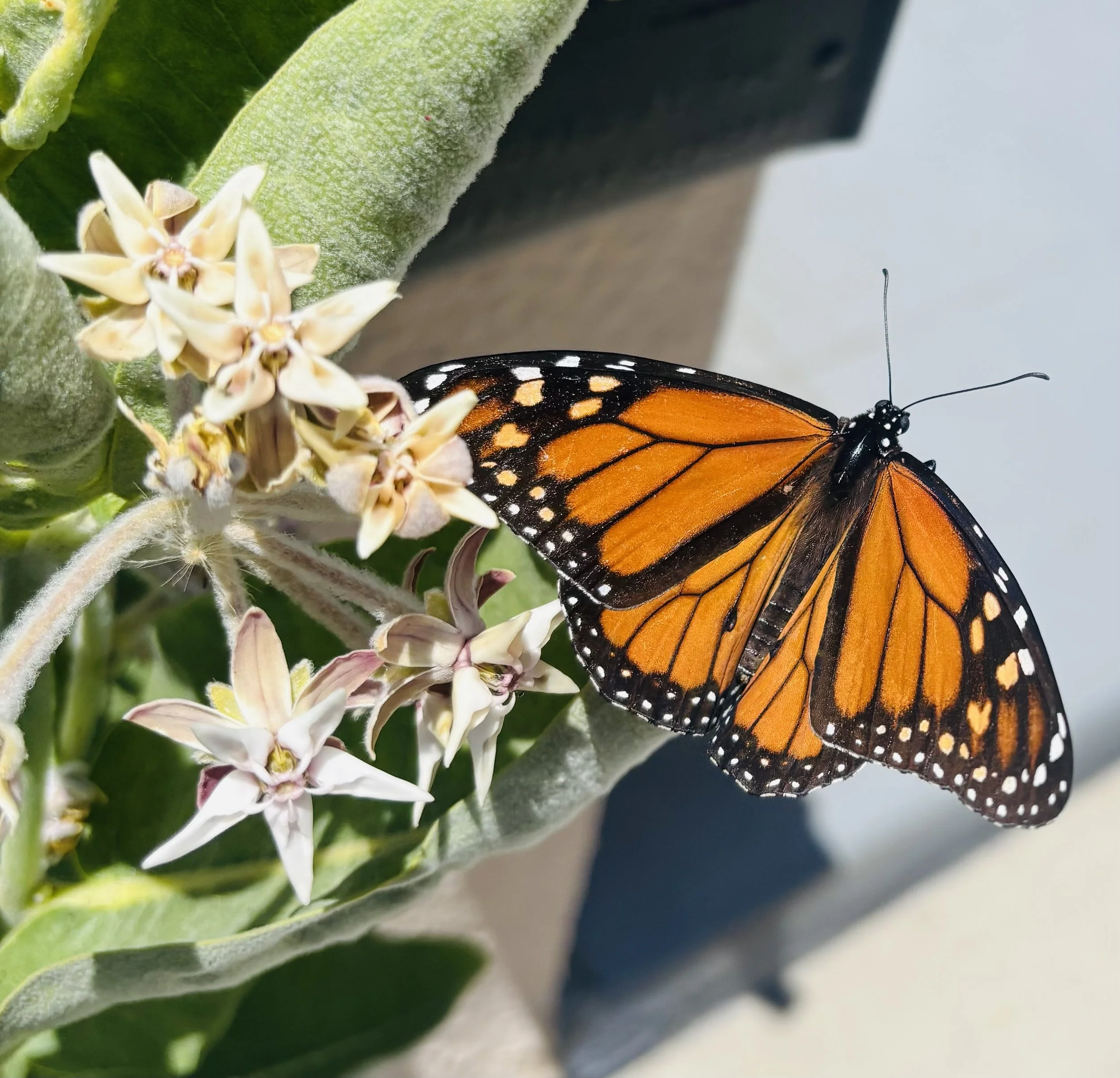
One of the most ubiquitous symbols of transformation is the butterfly. As an elementary school teacher, I have been provided with a kit for raising butterflies in the classroom more times than I can count. On each kit, it lets you know that the process will take 3-5 weeks. Having watched it so many times, I can assure you it has never happened faster. The caterpillars eat and eat. Then, with no clear guidance, they each decide when the right moment is to crawl to the top of the jar and make their chrysalis. The children and I wait with anticipation to see when the butterflies will emerge. Each day the children hope they will hatch, but they refuse to be rushed. They simply follow their natural order. It always takes the time it takes.
One year, a parent handed me a butterfly kit at morning drop off. Upon reviewing the instructions, I realized there was a very good chance the butterflies would emerge during our Spring Break with no children there to witness it. Obviously, I wanted to avoid this disappointing outcome. I placed the jar by the window because I read that the process might happen more quickly in a warm environment. When the chrysalises were hung in the cage, I preemptively put the food out hoping that somehow this might entice them to develop more quickly. No luck. The butterflies were completely unaware of my naive attempts at hastening their transformation for my own desired outcome. They emerged, unceremoniously, during Spring Break, with only myself and the custodian there to witness their first flight.
Each time I successfully recognize when my perfectionism is critically urging me to be different, I think of one of my favorite children’s stories. It’s called The Garden, by Arnold Lobel, and features the iconic duo, Frog and Toad. It begins with Toad enviously admiring Frog’s beautiful garden. Frog gives Toad some seeds and Toad excitedly goes off to plant them in his own yard. He puts them in the ground, steps back, and then, almost immediately, he becomes irritable and impatient. He begins to yell at the seeds. He implores them to start growing. The seeds refuse his commands, and he becomes more irate. This is always a fun part to act out for my students. The more dramatically I yell at the seeds, the more uproarious laughter I receive. Because even a seven-year-old knows this is not how you get something to grow.
Eventually, Frog hears all the commotion and comes to tell Toad he is scaring his seeds. Changing course, Toad wakes up each day and sings to the seeds. He reads them stories and he plays them music. Then he takes a nap, it rains, and he is pleased to wake up and find that the seeds have sprouted.
I laugh at my foolish attempts to hustle the caterpillars to transform more quickly. I shake my head at silly, old Toad yelling at his seeds. And yet, I’ve continued to let my harsh inner voice dominate my mind for many years, falsely believing this taskmaster can help me achieve the outcomes I desire in the time frames I set out. Like Toad, I know I must change course. I will still plant seeds and set goals, but now I will put my energy into creating the environment necessary for growth. I am simply going to make sure I get enough sun and water. I will read some stories, sing some songs, and see what emerges. I will wait to see what has been too scared to grow. I can’t force it. It will take the time it takes.
